


Register today at iil.com/international-project-management-day
And use Promo Code: ATTITUDE to save $10 US
See you on International PM Day!
Register today at iil.com/international-project-management-day
And use Promo Code: ATTITUDE to save $10 US
See you on International PM Day!
No matter how impressive your ideas, or how creative your message, if you are not reaching other people through the internet, you have no digital reputation. If no one reads your blog, or your website, or sees your comments, then in the digital world, you basically don’t exist. You might as well be talking to the wall. This will not help you in business.

Building your reputation in cyberspace is not much different than the tried and true “old neighborhood” way of getting things done. When people lived in small towns, everybody knew everyone, and everyone knew everyone’s personal and professional business (think Andy Griffith’s Mayberry ). Towns and villages were self-monitoring. Children all went to the same school, most people went to the same church/temple, and the businesses serviced the local population. (And as Garrison Keiller believed, “All the children were above average.”) If the butcher was skimping on your cut of meat, everyone knew. If a child, or adult, was misbehaving, the community would ultimately bring them in line (think Harper Valley PTA). Everyone had a stake in the outcome of their actions because they knew they would be held accountable to their family and neighbors. In many ways, social media has brought us back to those days – the days of being part of a community.
Facebook has become the town square, or maybe even as intimate as your living room. When you have something to share about your life, you ‘STATUS’ it. LinkedIn has become your office. When a business is doing something right, you ‘LIKE’ it and you ‘SHARE’ it. Ideas are ‘Tweeted’ across the globe like they used to be discussed at the local diner. In business, your expertise is ‘Googled’ and your community is built through ‘LinkedIn’ connections. The pace is different, but the concept is the same: it is your community that stands behind you and supports you and helps you succeed, and your community is now online and talking.

Photo credit https://ibm.biz/Bdx8QK
That’s right. Your kids have been using it for as long as they can remember, but more importantly, companies, your company, my company, and the next company you want to work for, is using it. (Check out “Ranking the Top 100 Global Brands” and see how Dell, Toyota, Starbucks, and others are using social media)
Social media is part of our lives and it is not going away. Basically, adapt or die! (I know that is harsh but I think it is true. “Adapt or Die” is the title of Chapter 1, of Socialized!: How the Most Successful Businesses Harness the Power of Social, by Mark Fidelman.)
If you do not use social media, you are abdicating control of your personal message. Whether personal or business, people are talking, so why not make sure that you are in the conversation. Jeff Bullus, the author of “Blogging The Smart Way,” says that “The thing to keep in mind about brands that don’t want to engage in Social Media is that these conversations are going on about you whether you are there or not, and whether you want to hear it.”
I am sorry to break it to you but… your High School friends are talking about you on Facebook and pictures of your dog are on Instagram. But more importantly, your boss’s boss just ‘Tweeted’ about a new product that she thinks may be the next big thing and you missed it. I really think you want to be in the conversation.
 Everyone has at least one story that they love to tell others. When you recite it, the whole room gets quiet and everyone listens. That, my blog friends, is the ‘it’ factor, your passion – the topic that makes your eyes sparkle. Maybe it is your recent trip to Paris or pictures of the baby, for many, it is their profession (I can wax for hours on project management), or something political like Global Warming. Do you love to tell people your ideas on building a better mousetrap, or a unique way to solve a tricky business problem? There is a passion in you and a story to tell.
Once you narrow in on your personal brand, social media gives you the ability to communicate to a wide audience. Sharing your thoughts, your views, your passions, helps to build an authentic picture of your expertise and let’s people know what value you bring to the global conversation.
Allison Graham, in her book “From Business Cards to Business Relationships: Personal Branding and Profitable Networking Made Easy,” says that “The two most predictable questions that will be asked when you meet someone are, “Do you have a business card?” and “What do you do?” Your digital business card should communicate what you are passionate about. This is your chance to show your stuff.
Remember the ‘old neighborhood’ that I was talking about, well it now has gone digital. Whether it is your local church group or what Etienne Wenger calls a “community of practice” (a group primarily made of practitioners in a field or profession who are passionate about the work that they do), they are all connecting through social media. People want to be connected and they are connecting through online communities in the millions. In the end, it is your communities that will be your biggest supporters and where you will grow your online reputation. (Check out Design to Thrive: Creating Social Networks and Online Communities that Last, by Tharon Howard)
Do you really need more reasons to start using social media? Here’s an easy way to add to your online reputation immediately: leave a comment below and connect with me now on LinkedIn. Welcome to my digital family.
Have you lost control of your day? Is the pace of everything getting faster and faster, so that you just can’t get done what you need to? Do you feel like your projects are spiraling into chaos? Finding ways to maintain one’s sanity while managing large, fast-moving projects is a creative dance. Recently, while teaching a course on “Managing Projects in e-Business,” one of my students asked me how I controlled chaos on my projects. My answer: “I plan for it!”
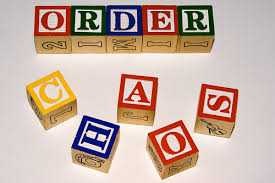 My job as the Project Leader is to keep the project moving forward; to meet deadlines, budget constraints, ensure performance, and most of all to manage the client’s expectations. I know better than to think that I can ever ‘really’ control things, so I put processes and procedures in place to make sure that maybe the roof won’t blow off when the tornado comes through (if you get what I mean), and to know what I might do if, and when, it does. I have been managing chaos for years (long before there was Agile PM), with solid planning, a deep understanding of my team and client, and with a nimble attitude.
On a project, especially in today’s complex and dynamic environments, chaos can be defined as “a state of the (project) system where the future development of the system is not predictable, or only poorly predictable.” (Avoiding and Managing Chaos in (Construction) Projects, Sven Bertelsen and Lauri Koskela, 11th Annual Conference on Lean Construction – Denmark, 2009 ) Basically, a small unpredictable event, like the delayed arrival of key resource materials, may seem like nothing more than a nuisance when it happens, but the cumulative effect of many deliveries not taking place over many months can delay you to the point of no return. When you are dealing with complex projects, you are sitting on the edge of chaos most of the time. If you plan accordingly, it is less likely that you will be overtaken by events. (How to Save a Failing Project: Chaos to Control, Ralph R. Young, Steven M. Brady, & Dennis C. Nagle, Jr.. Management Concepts, Inc., VA, 2009)

I know it may sound oversimplified, but most of the battle of controlling chaos is staying calm and practicing good project management. What dance steps have worked for you?
When I started to manage global teams, it became apparent to me that people everywhere were generally bad communicators. People tend to talk, not listen, and with the loss of visual cues, multiple native languages, and different writing styles, I saw a recipe for significant misunderstandings. On a project, especially an agile one, misunderstandings can cost time and money. 
Virtual environments of communications, (email, text, and phone, to name a few) pose a higher risk of miscommunication because they lack the ‘visual components’ that we find in face to face communications. This poses both challenges and opportunities for us as Project Leaders (“Social Networking, The “Third Place,” and The Evolution of Communications,” 2007). The challenge comes because we lose body cues that help us understand whether the other person is listening, or mulling over our questions, or getting ready to answer. We are not necessarily sure that our communication has been received as intended. On the other hand, we have the opportunity to incorporate new modes of contact into our virtual communications that can provide us with enhanced team collaboration, knowledge sharing, and understanding. (“Six Sigma Team Dynamics, Roles, and Success Factors,” Skillsoft, 2017)
I put this list together after decades of successful virtual management of worldwide teams to maximize project communications and minimize misunderstandings.
 1. Be Brief: Use as few words as possible. Utilize the technology medium (email, twitter, instant message), that will convey your message without extra fluff.
“Je n’ai fait celle-ci plus longue que parce que je n’ai pas eu le loisir de la faire plus courte.” (translation: “I have made this [letter] longer than usual, only because I have not the time to make it shorter.”) – Blaise Pascal
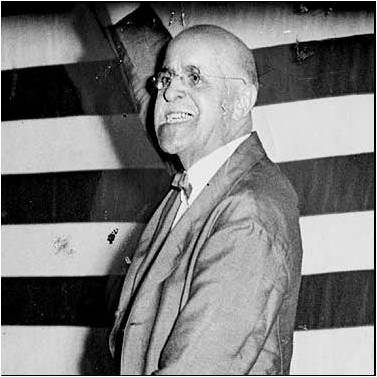
2. Choose Your Medium Wisely: “Never write if you can speak; never speak if you can nod; never nod if you can wink.” – Martin Lomasney
3. Pick Up The Phone or Skype: If a text or instant message dialog goes for more than 5 minutes (5 texts back and forth), it is best to pick up the phone or Skype and talk to the person.
4. Practice Good Emailing:
5. Choose the 1 Question you want to be answered: If you send a note with several questions in it, typically, only one question will get answered. Often, it is the last one. Occasionally, it is the first one. But usually, it is the most interesting one. Why not decide instead of leaving it up to fate?
Miscommunication poses an unnecessary risk and cost to any project. In a future post, I will talk more about successful global team communications and communication plans. Following some simple virtual rules can make all the difference in being understood.
There is no greater pressure than life-or-death situations. Hurricane Harvey just left and, as I type this, Hurricane Irma is pounding and ripping up the eastern side of the US. On top of that, with today being September 11, I cannot forget the incredible terror attacks on the Pentagon and Twin Towers, which changed my heart and my thoughts on what it means to lead in a disaster forever.

Aerial view of damage at the Pentagon 2 days after the attack in 2001 (Picture: Cedric H. Rudisill)
Emergency leadership requires a person to take immediate action. There isn’t a lot of time to figure out best practices or analyze the situation for an optimum solution. In an emergency, leaders must show confidence, take charge, communicate what needs to get done, and delegate with authority, all while appearing calmly to really know what to do (when they may not). It is about making the best choices, at that time, for that situation and being able to communicate them clearly.
Leaders in a crisis are the people that are able to make decisions quickly for the benefit of everyone. They know that setting priorities (do this first, then this, then that) and making hard choices (ignore that and do this), can make all the difference between getting stuff done and things getting out of control.
Emergency leadership also requires a ‘steady hand at the helm.’ You need to put any extremes of emotion aside and focus on the tasks to be done. Your ability to stay calm under pressure gives the confidence to others to follow your example. The more you can rise above the clamor and chaos, the more you will be able to rally the teams needed and get people moving in the right direction.

Neighbors removing downed trees in Jacksonville, Florida. September 11, 2017 (Picture: Johnny Milano for The New York Times)
Stay calm, stay focused on the goal, and find a way to stay positive. As a Leader, your mental attitude goes a long way to demonstrate to others that together you can all get through this crisis.
There are always stressors and pressures in life, as in business. Hopefully, few of us will find ourselves having to lead others through high water and downed power lines. But, by being prepared for the potential of Emergency Leadership one day, you can rise to the situation better equipped and more able to make order from chaos.
Lately, no matter where you turn, there are natural disasters, man-made chaos, and just plain craziness going on worldwide. No one can manage chaos. But what you can do is prepare yourself and others to handle complex and critical situations.
 The Washington Post via Getty Images: Kingwood, Texas August 29, 2017
Hurricane Harvey and the South Asia floods showed us 2 examples of the need for leadership, preparation, and organization. Every person on the planet, and especially every project manager, should have a plan in place for how they are going to deal with critical situations.
Though you may have never experienced this type of chaos before, whether in business or in your personal life, everything you have ever learned has prepared you for this moment in time. Of course, a late product delivery is in no way a match to the enormity of 500-year flood, but the same management principles apply.
One thing is for certain, at some point you will be faced with a critical situation and you may never know when or where it came from. It is our job as project managers to mobilize and lead the way out of the trouble waters. These 5 steps are just the beginning, but if you get no further, at least you can get stable.
My prayers are with the victims of the most recent catastrophic events. May you have good managers leading you and a resilient attitude.

How many times have you said, “I just wish I had more time for …?” With global business buzzing by in nanoseconds and a world of information in your phone, having time to get everything done seems more and more elusive.
At one point in my life, I let time win. Between my more than full-time job, a second job teaching at night, family, pets, my two blogs, and other business activities, time owned me. There was never enough of it and I always felt defeated by it. As the days/months/years were slipping past, I felt stressed and on the road to burnout.
That is when I started applying the same time management principals that I use on business projects to my life. In a project, getting stuff done isn’t about time, it is about planning and priorities. It’s about making choices.
If your kid is in a sports game, you find the time to be there. You put it on your calendar and you make it a priority.
If your favorite band is in town, you are there. You buy the tickets as soon as they come online, you put it on your calendar, you make it a priority.
People are able to find the time to do things that are important to them when they choose to make ‘that moment’ a priority. We are constantly making choices (though not always easy ones) about how we spend our precious time. And true, there is never ENOUGH time in the day to do every single thing we have on our list, some things have to go because time is about making choices as to what is important to you.
By changing how you speak about time you can change how you manage it. Start looking at time in terms of your priorities instead of the minutes that a task takes. Priorities are choices and choices are manageable.
According to Andrew Newberg, M.D. and Mark Robert Waldman, words can literally change your brain. I challenge you to change the phrase “I don’t have time” to “it is not a priority to me.” (This idea came from an article titled “Are You As Busy As You Think” by Laura Vanderkam, The Wall Street Journal, February 22, 2012)
Try these phrases out loud:
“I would love to help you write that proposal, but I can’t BECAUSE WINNING NEW BUSINESS IS NOT A PRIORITY TO ME.”
“I would really like to help you with that school project, but I can’t BECAUSE YOUR EDUCATION IS NOT A PRIORITY TO ME.”
“I would really like to go to the gym to work out, but I can’t BECAUSE MY HEALTH IS NOT A PRIORITY TO ME.”
If this is starting to feel a little uncomfortable, I understand. Changing your internal language in this way shows you what you make truly important in your life and sometimes that is hard to look at. This language shift shows you what you are willing to place on top of your limited time resource list and the result may surprise you.
Everything cannot be important at the same time, so your job is to determine what really is your priority so that you can action that time appropriately. (Note: I am NOT suggesting that you say this phrase, “because X is not my priority,” out loud to other people – that would be rude and may get you fired or divorced.)

1. Know where your time goes by keeping a time log.
The first step to managing anything is to understand what you are trying to manage. Do you know how you spend your 168 hours per week? (That is what we all get, no more, no less.)
2. Change how you speak about time
I challenge you for the next week to erase the phrase “I don’t have time” from your vocabulary. Replace it with “it’s not a priority.” Then after that week, move on to step 3.
3. Order your priorities
Take the time log from step 1 and put the activities into an order of importance for that day. Did you spend time on activities that got you to your business or personal goals? Did you get distracted or waste time doing a task someone else could have done? This is the hard part – what really was important to you in that day? If spending time with your family was important, then why were you wasting time on Snapchat? If you had a work deadline, what did you have to ‘not do’ to get it done and was the ‘not do’ something that was important to you? Again, priorities are about choices and making the best choices for you, in the day, with the time that you have.
4. Schedule your time to make more time.
Now you should be ready to schedule your future priorities into your daily calendar. Don’t just schedule work meetings. Make sure to include social media time, family time, doctor’s appointments, and the gym. Once you start ‘owning’ your schedule based on priorities, you will find that your time will become more manageable. (I schedule walking my 3 dogs for 45 minutes every day, 365 days a year. If I don’t they will make sure I know they are important by acting out.)
Whether you use Google, Outlook, or a paper DayTimer, make sure to carve out blocks in your day/week to accomplish what is important to you. If you don’t schedule things, then you can’t complain that you don’t have time for them – you did not give them any importance.
————————————–
Personal time management is not a once and done task. We all slip and get lost in time wasters every now and then, and our priorities are always changing. This is the time management process that works for me and helped me find the 25th hour in my day. Let me know what works for you… if you have the time.
People love acronyms and one of the newest one in the learning industry is MOOC. What is a MOOC you ask? Maybe this illustration can help:
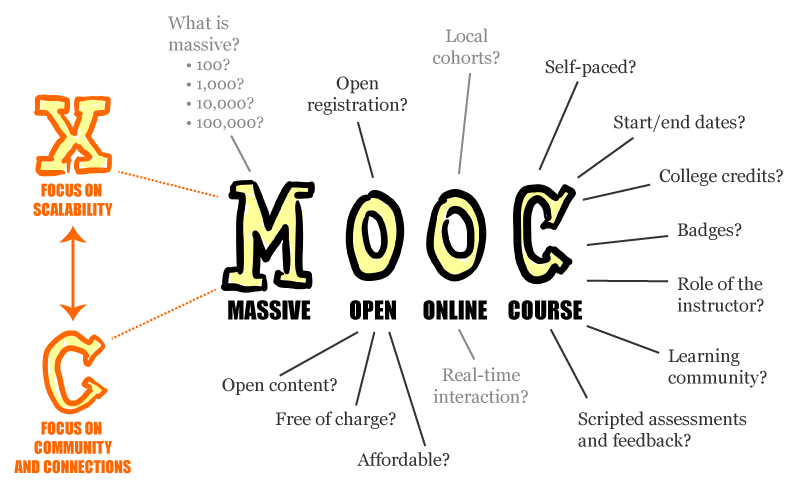
Image: “MOOC poster mathplourde” by Mathieu Plourde
The internet is an incredible vehicle for teaching and learning. Massive Open Online Courses or MOOCs, became popular about two years ago when colleges and universities realized the potential of this creative way to reach a lot of students at once. A MOOC basically is a course online that is open to many people at the same time.. Originally they were free and no-credit courses, but that has been changing. There are all kinds of courses now available on the internet, from Chemistry to Pottery, and most of the top educational organizations in the world are developing them. Sooner or later, you probably will take a MOOC.
Online education can be a real win for many students, especially those that can’t get to a classroom, but (based on the statistics that I am seeing), this type of learning has its challenges. According to research done by Shanna Smith Jaggars, Assistant Director of Columbia University’s Community College Research Center, 32% of students failed or withdrew from for-credit online courses (compared with 19% for equivalent in-person courses) 1 and, according to educational researcher Katy Jordan, MOOCs have generated 50,000 enrollments on average but with a completion rate below 10%. 2 Reading those statistics got me to thinking about how to help students do better (and maybe want to complete the course).
Here are my five suggestions on how to be successful when taking a MOOC:
1. Practice Good Time Management
Knowing how to manage your time is critical when it comes to online learning. It is just to easy to do everything else before you sit down to do your course work. Everyday physical demands, like work, family, and community obligations, can get in the way of virtual activities. To better manage your time you need to:
2. Manage Your Work Environment
 Your physical space is a critical factor of success when working online. A good study environment without distractions is essential to any student’s success but especially an online student.
3. Commitment and Motivation
Like with all schooling, the motivation and commitment to attend to what needs to be done to succeed is important. But with online classes it may be the biggest success factor of all. Unlike a class room course where you are surrounded by your peers and an instructor that can give immediate support, online students must figure a lot of things out on their own. You have to be your own technical guru, know when to ask questions and how, do your online classwork every day no matter what, and keep working through stumbling blocks that come up.
4. Communications Skills
 When you are learning in an online environment, your written communication skills and reading ability are extremely valuable. It is up to the student to communicate their needs in writing almost exclusively because in online classes you are rarely seen or heard. Unlike a physical class, the virtual world does not allow for non-verbal cues to tell the teacher that you don’t understand something, it will be up to you to ask, in writing. Also, make sure that you are ready for a great deal of screen reading, though there may be some hard copy books as well.
5. Technical Understanding
You don’t need to be a geek to take a MOOC, but you do need to know your way around your computer and the software that the course is given in.

Keep up the good attitude. See you next blog.
– Lorian
Lorian’s Social Connections
Email: thedigitalattitude@gmail.com
LinkedIn: https://www.linkedin.com/in/lorianlipton/
Twitter: https://twitter.com/LorianL
Facebook: https://www.facebook.com/TheDigitalAttitude
Website: http://www.digitalattitudellc.com
—————————————————–
References
Image 1: “MOOC poster mathplourde” by Mathieu Plourde {(Mathplourde on Flickr) – http://www.flickr.com/photos/mathplourde/8620174342/sizes/l/in/photostream/. Licensed under Creative Commons Attribution 2.0 via Wikimedia Commons – http://commons.wikimedia.org/wiki/File:MOOC_poster_mathplourde.jpg#mediaviewer/File:MOOC_poster_mathplourde.jpg
1. http://ccrc.tc.columbia.edu/presentation/moocs-unbundling-implications.html

It is great to see all the coaches out there with the kids on the fields now that it is spring in the east. All the little sweaty people running back and forth trying to build up stamina for the big game to come. Drills and drills and laps and more drills. Practice, practice, practice. It made me think about my role as a leader and how I coach other people to their personal best.
The word ‘coach’ brings to mind sports heros like, Knute Rockne and Vince Lombardi. And, when I think of a sports coach, I think of someone who is focused on one thing: winning. Even though the great coaches care about the players, everything they are doing is to drive the team to the win at the end of the game. Vince Lombardi, Head Coach of the Green Bay Packers, said “Winning is not a sometime thing; it’s an all-the-time thing.” He accepted nothing less than first place and said that second place was the ‘first loser.’
Here is an example of the most driven coach in history:
I learned a great deal studying sports coaches, and one of those things is that organizational coaching is completely different. The goal for organizational coaching is about the individual and what they learn through the process. “Coaching is unlocking a person’s potential to maximize their own performance. It is helping them to learn rather than teaching them.” (John Whitmore, Coaching for Performance). There is a lot to be learned from the sports analogy but in the workplace, coaching is about the relationship between me and the person I am coaching. There are several things that are important from my side as the coach:
 1. I must be fully engaged with the process and make sure that I am pushing my protege in such a way as to get them to be moving forward. Too many times people wait until the other person brings them problems. When I coach, I set up an agreement with the protege upfront and have defined things that s/he is working on. This relationship is about challenging the other person to improve, to develop new skills or new capabilities. The responsibility to figure out how to get them going sits with me.
2. I must be an active listener and come prepared with the right questions to engage the protege. Sometimes it is hard with all the distractions around, especially when 90% of my coaching is over the phone and on-line, but the other person deserves my undivided attention. If I am not paying attention, then why am I doing this and who is it benefiting. I make sure to block off sufficient time in my calendar to focus on the protege and the challenge.
3. Coaching for me is also about providing guidance that the other person could not get on their own (or at least not easily). I am here to teach them to fish, not to fish for them. My goal is to provide my protege with tools that they can use going forward that will enhance their abilities, help them make decisions and solve problems, so that over time, they can be self sustaining.
Keep up the good attitude. See you next blog.
– Lorian
Email: thedigitalattitude@gmail.com
LinkedIn: https://www.linkedin.com/in/lorianlipton/
Twitter: https://twitter.com/LorianL
Facebook: https://www.facebook.com/TheDigitalAttitude
 Digital Attitude: Becoming Eminent
